
How to Be Human: Agustín Fuentes on Imagination, Community & Our Evolutionary Past
Listen in your favourite podcast app
Show notes
What does it actually mean to be human — and what can our evolutionary past teach us about how to live better today?
In this episode of Originally Human, I’m joined by anthropologist and author Agustín Fuentes for a wide-ranging conversation about what makes our species unusual, and what we might be getting wrong about human nature.
We talk about why studying other primates can teach us so much about ourselves, how biology and culture are constantly shaping one another, and why humans may be less remarkable for being “intelligent” than for our extraordinary capacity to imagine possibilities and come together to make them real.
Agustín also challenges one of the assumptions at the heart of much ancestral-living thinking: that there is a single “natural” way for humans to live. Instead, he argues that our evolutionary history reveals something much more interesting — that there are many successful ways to be human.
We explore what that means for parenting, creativity, play, community, food, and even the way we use technology. We talk about why human children need many caregivers, why free play matters, what we may be losing when we outsource our thinking to AI, and why knowing your neighbours might change the way you experience the world.
We end with a question that feels particularly important right now: after studying humans and our ancestors for decades, what gives Agustín hope about our species?
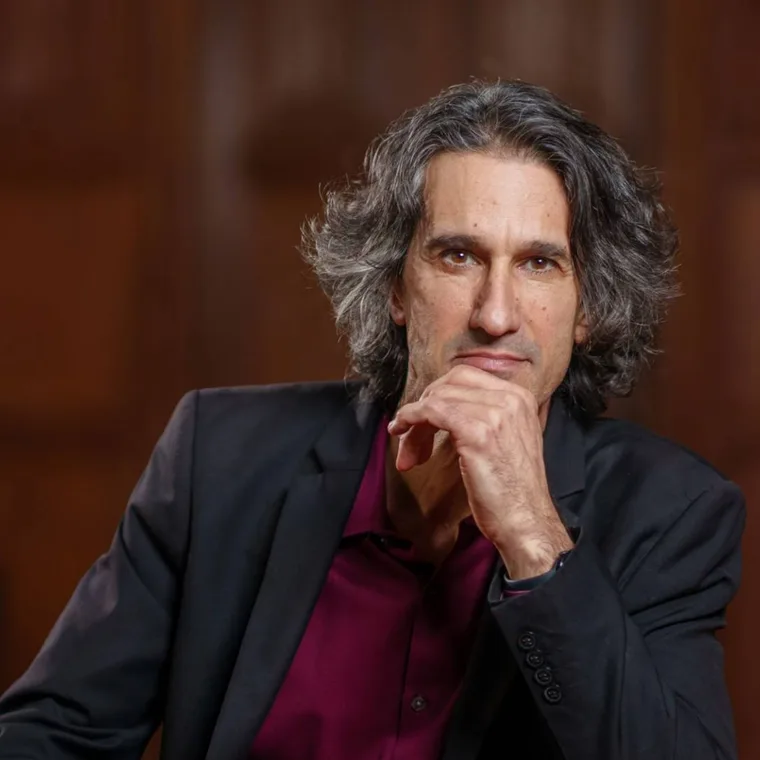
Professor Agustín Fuentes' work explores human evolution, primate behaviour, creativity, cooperation, culture, belief, and the complex relationship between biology and the worlds humans create.
This conversation is ultimately a reminder that being human has never been about following one perfect blueprint. It has always been about imagining possibilities, adapting, and — perhaps most importantly — doing it together.
Resources:
Some of Agustín's work on Big Think/The Well:
I put a camera on a monkey. Here's how it shook my understanding of humanity
Why belief is the most powerful disruptor
Can you separate science from the scientist?
We need a new measure of evolutionary success. Here's why.
Other books mentioned in this conversation:
Why Zebras Don't Get Ulcers by Robert Sapolsky
I Love Learning; I Hate School by Susan D. Blum
Episode transcript
Follow the full conversation at your own pace.
This transcript was generated automatically and may contain errors.
Speaker 1
The other day I was at a concert, really good concert, and I I turned over my shoulder and I looked and it was a full moon coming up over the ocean, right? This this concert of us near the eye. It was just spectacular. The music was playing and I looked and it was just and I just lost myself for a moment, right? I just I wasn't there. I was just there in is a transcendent moment. We're all capable of that. What's really fascinating is when you experience that as a humans, and you'll do it many times in your life, for the next little while you feel better about everyone else. people donate more money, they tend to say hello more frequently, they tend to like sleep a little better. It's really fascinating how awe is such an important part of our life that has direct effects on our body and our relations to others. And so I I think about that a lot and how do we how do we facilitate that happening for more of us more regularly, right?
Speaker 2
Today I am speaking with Professor Agustin Fuentes, anthropologist, author and professor, whose work explores one of the biggest questions we can ask what does it actually mean to be human? Augustine's research spans primate behaviour, human evolution, culture, cooperation, creativity, and belief. Rather than seeing biology and culture as separate forces, his work shows how they have shaped one another throughout our evolutionary history and continue to shape the way we live today. He is the author of several books, including The Creative Spark and Why We Believe, in which he explores how imagination, storytelling, and our search for meaning have been central to making us the species we are. Today we will talk about what studying other primates can teach us about ourselves, what truly makes humans unique, why creativity and belief may have been essential to our evolution, and what anthropology can, and perhaps can't, teach us about living well in the modern world. Augustine, welcome to Originally Human. It's a real pleasure to have you here today.
Speaker 1
Thanks. Thanks for having me. I'm I'm excited to have this conversation.
Speaker 2
Great, me too. So you began your career studying other primates. What, if anything, did studying them teach you about us humans?
Speaker 1
I so it's sort of amazing. I I I really began my career studying actually humans and other primates, but I I published more about the other primate work. I also studied seagulls and a a little creature called a dusky-footed wood rat. So I I was, you know, sort of figuring out how how to understand things. Studying other primates is necessary for anyone who wants to ask the question, what does it mean to be human, right? We're primates, right? We're part of this big group, primates. And so The other primates are the sort of comparative group. It's the logical way we ask, well, what's distinctively human? and the first thing I learned from studying other primates, chimpanzees, macaque monk monkeys, langer monkeys, the very first thing I learned was, wow, I thought I was much more interesting than I am. I what I mean is that many of the things we think of as as resoundingly human, caring for one another, families being together. complex relationships, you know, sort of soap operas of life. That that's actually found in lots of other organisms. And the other primates have a lot of the things we think we that are human. And so what's amazing and and powerful is to see things like care and personality and conflict in other species and recognize that we're part of the world. Now, having said that, humans are very distinctive, right? We we do a bunch of stuff that's that's quite interesting. For example, having this conversation about what it means to be human if there were two chimpanzees here, they could not have that conversation. Or they wouldn't want to. Who knows?
Speaker 2
Fascinating. so but okay then so then continue the that like train. So if someone asked you what makes humans different from every other species, except for maybe that we are able to or have the interest in talking about ourselves, why we are as we are, is there other other other things? What what would you say? What makes us unique?
Speaker 1
Yeah, we're very arrogant. I think that's one of the things that makes us very unique. We we think a lot of ourselves. no, so if you think about the patterns, right, sort of deep social relationships is common for all the primates for many, many different kinds of animals. But for humans, those social relationships also involve language. They also involve this incredible thing we call symbol, right? The sort of representation of the world and the perception of the world in different ways. And I think Really amazingly, we use this symbol and this language to create really complicated lives that we share with one another. And and I think those are the things that are distinctively human. and you know, I've written a lot about this sort of ideas of creativity or imagination, which other organisms have, but humans have a particularly powerful creativity imagination. And I think the ability to believe, the ability to wholly commit to stuff we can't see or touch, but that we know to be true. That's that's pretty powerful too.
Speaker 2
Yeah, absolutely. So are there any misconceptions people have about what makes us unique as humans?
Speaker 1
Yeah, I mean, I think people like consider that humans have a personality. Like we're individuals. So are many other animals. Most other animals have incredible personality. If you go hang out with a group of monkeys, you know, even for a day, you'll learn a bunch of the different personalities, what they're like, what their relations are. So a lot of people think just humans have that. That's not true. Another thing is people think that humans are just much more complicated or much smarter than other organisms. And those are those are bad ways to think about it, right? Yes, I mean My daily life and, you know, the fact that I have to pay, you know, a house mortgage and insurance and, you know, have medical coverage, that's a little different from a chimpanzee, let's say, who doesn't have those things. But a chimpanzee has other things that they're concerned with that they're worrying about, that they're sort of dealing with every day. So we we make it much more complicated than other organisms, but other organisms are complicated and wonderful in their own ways.
Speaker 2
Yeah, fascinating. Maybe we could learn some from the other species.
Speaker 1
I I think we can learn a lot from other species. For example, we humans are the an incredible biologist named Robert Sapolski wrote a book many decades ago, many three or four decades ago, called Why Zebras Don't Get Ulcers. And I I I it's a great, great name for a book. It's actually a fantastic book still. But the one thing that is very distinctive about humans is that we can think ourselves into physical problems, right? We can worry so much that our bodies respond. So what the example he gave is that there's a zebra sitting out on the savannah. And a zebra looks over and sees this lion running at her, right? So she immediately, her whole body goes under this stuff. She runs away and she either gets away or doesn't. But if she gets away, then her body calms down and she goes back to normal. Humans, we do the same thing if a lion's chasing us, but we also do the same thing when we're stressed about work or when we're stressed about family, or when we're stressed about, you know, what are we gonna be doing next year? Or how am I gonna pay, you know, the mortgage. Those kinds of things are fascinating and distinctive to humans. We have chronic stress that we and we create through our societies and through our minds. And so there's a a something that's distinctively human and just not good.
Speaker 2
Absolutely. Absolutely. I wish that was not the case, but well well. Guess we'll have to live with that.
Speaker 1
So that's something we can learn from other animals, right? I think sometimes like sometimes I'll go home after a stressful day, all these kinds of things, and I'll get home and I'll look down and and I have a very old dog, but she's very sweet. She'll be laying there, she'll sort of look up, she'll wag a little bit instead of go back to sleep. And I'm like, There, you know, that's what I should be doing right now, right? W instead of spending the next two hours stressing about something.
Speaker 2
For sure, for sure. Yeah, it's a good example. So one of the things I appreciate about your work is that you don't reduce humans to either biology or culture. You argue that it's always the interaction between the two. Could you explain what you mean by that?
Speaker 1
Yeah, so we are biocultural or biosocial, the two words are interchangeable organisms. most animals are, but we are especially so. So even before you're born, right? Even before we're born, what your mother is eating, what her social relations are with other people, what her sleep's like, you know, what she's doing on a daily basis actually has some small, sometimes significant impacts on how you develop as an infant. And everything I just described about the mom is a cultural context, right? It's it's it's you know where she lives, what she's doing, what the context is, things like that, who's around her, who she's interacting with. So from the moment that we start to grow as a biological organism, that biology, our bodies, are being shaped and are shaping culture, right? And so we're biocultural from the get-go. And and and anything you think about, like dressing, you know, like you know, I wake up this morning and I shaved. Right. That that's a very biocultural thing. I have a, you know, pattern of physical reality on my body, which I alter for cultural purposes. And if I don't do it, I feel weird. You know, so we have all of these really fascinating things. and and sometimes they're superficial, like clothing or or or shaving, but other times they're very, very deep in sort of how you live your life, what kind of job you do, what you eat. has significant structuring impacts on your body and aspects of your body have significant structuring impacts on your life, right? What you look like in many societies here in the United States, what you look like, race, gender, age, has huge impacts on how people treat you and how you relate to them. And so all of these things are really important. I guess I'm rambling here, but I try to really drive home this point that once you sort of understand what biocultural means and that we are biocultural organisms, that actually opens up the world of possibilities. It helps us think about education, help us think about sort of, you know, negotiating conflicts with families, helps us think about care. All of these things aren't simpler, they're still complicated, but at least we can understand that there's different ways which we can try to make things better.
Speaker 2
Hmm. that's really fascinating and a little bit scary. That 'cause it's i it's both good and bad. If it's like you have a lot of kind of impact, what what would you do? It's
Speaker 1
Yeah. Okay. Yeah, I I most people don't think about that, but you know, think about it. you know, across your day, you're doing a lot of things with your body and to your body that are shaping everything around you.
Speaker 2
Yeah, for sure. For sure. Well, I guess. At least it's good to be aware about it. That's always the foundation, right?
Speaker 1
And scary, but like you said, you know, it is it is terrifying.
Speaker 2
Absolutely. so many people, myself included, are fascinated by the idea of living more in line with our evolutionary past. Do you think that is a useful way of thinking or does it risk oversimplifying what humans are?
Speaker 1
Well, I for my my brief answer is nope, can't do it. Doesn't work. And you don't want to do it. I mean, think about your evolutionary past. So I happen to like showers. I really like, you know, you know, I like shaving, I like washing myself on a regular basis. Okay, that wasn't even possible until very recently, right? So fine if we wanna go back to smelling, you know, a lot different and not being able to bathe and being all matted and stuff like that, that's fine. but that's not my my choice. The reason I bring that up is there is no past that was the right way to be human. There is humans today, we're still evolving, and we are dealing with sort of what's out there. And so I think there are better and worse ways to deal with the world, but it's not by going backwards. What we can do is study the human past to understand: like, what are the options? What are the patterns? What do we have out there? And and that's That's the insight. So rather than trying to find a paleo diet or a paleo person to be like, what we want to do is understand what are the range of things that we did in the past and our ancestors did that help us understand what our options are today. The punchline here is that there are many successful ways to be human. There's a lot of ways to do this thing well, right? And so in any one given context, we're gonna figure out what are our options, how can we do this? and I I just think that's that's really fascinating. one of these really incredible things about humans over time. is that we do really, really, really well when faced with challenges when we come together, when we care for one another, when we collaborate. We know that. And so in the contemporary world with all the problems we have, one thing that I stress a lot is, you know, one of our superpowers is being able to work together. And and it turns out that that usually helps us in in overcoming obstacles. So that's one paleo that's one sort of ancient human tradition. But it's not really ancient. It's ongoing, right? It it's right now. So It just it's ha it's worked for us before and it can work for us again.
Speaker 2
Absolutely. No, that makes total sense that using it as like a s a way to gather kind of information on what has worked going forward.
Speaker 1
So think about this. one of the most critical things that that humans do is reproduce, right? As many organisms do, right? You know, if babies or or you care for a baby or something, right? You you're related with transitioning and making the next generation happen, whatever your role is and however you do it. What we know for a fact, through bodies, through archaeology, through study of of of contemporary humans and past humans, is that raising a human child takes a lot of people. And it you that's all it takes a village. It's not a joke. Now, one person can do it. It's so much stress, and human humans are incredible, especially moms, do amazing work, but there's nothing about our past or our bodies that suggests that evolutionarily we have evolved single individual child rearing. We are actually what's called cooperative breeders. We come together and work together to facilitate the development of these babies that take forever. To develop. I mean, come on, like, you know, if you're out there watching a giraffe get born, right? Plump, it falls down like, you know, two meters onto the ground, gets up, stands up, and then you know, seven minutes later it's running across the the savannah. Whereas the human infant, I mean, it takes a few months to even raise its head. So so to do that, and that's all because of our big brain growth and all of this incredible stuff that happens in childhood. And to do that, we need care. We need multiple individuals to be there to teach, to hold, to care for the infant and and the interactions between infants. So again, that was a long ramble, but it's one of these great things that we can see, why are our bodies this way? And it's not just moms, it's not just women, right? So every human body, no matter what genitals you have or or or ovaries or testes or what have you, when you hold a young infant, especially if you hold and put an infant against your skin, skin to skin contact. We all have the same hormonal and endocrine responses. Humans, unlike many other mammals, have a species wide, really powerful response for caretaking.
Speaker 2
Mm, that's beautiful. Wow.
Speaker 1
It is. It's it's very and it's and we can even expand it beyond our own species. What's amazing about humans is, you know, you know what else will give you that strong like caretaking thing? It doesn't have to be a baby, it could be a puppy. Right? You know, and that's that's crazy that we do this cross species care in really impressive ways. That's, you know, wonderful. Right. It offsets some of the horrible stuff we do, I hope.
Speaker 2
Yeah, absolutely. But so I am really curious about let's say imagination, creativity. So in the creative spark, you argue that imagination played a central role in human evolution. So when you talk about imagination, what do you mean? Why was it so tang transformative?
Speaker 1
So think about the possibility to produce mental sensations. It's not necessarily imagery. It's not always pictures. It's just sort of to to be able to in your own space, your mind, to sort of come up with things that maybe you haven't seen. Maybe you haven't ever encountered. And and we're able to do that, right? So so, you know, we we have cued representation where was like, you know, I had an apple yesterday and I can picture that apple and and taste it again. That's That's all organisms have that, that kind of memory recollection of something they experienced. what what's probably not distinctive only to humans, other animals probably have this, but what is really powerful in humans is this ability to put together a bunch of stuff that we have experienced with things that we haven't experienced but assume might be possible and to put those things together and then to try to make them real. So we do this all the time. We imagine things, we're like, how could I figure that out or how could I make this happen? Whether it's relationships or technologies or You know, even something simple like you know, hundreds of thousands of years ago there's probably groups of of humans living in an area that got really dry or something, and they're like, Yeah, what what if what if we head over to that mountain range over there and we just sort of give it a shot and maybe there's maybe there's water. I imagine there's a river or a ocean or something over there. And then they went and, you know, half the time they probably died and didn't make it, but at least they had the the possibility, right? They imagined possible outcomes. And we do this all the time, and it's very powerful for both bad and good, but But it it's a wonderful ability that humans can sort of create possibilities and try to make them happen.
Speaker 2
Yeah, absolutely. So basically it kind of made us smarter. Is that is that a way of seeing it?
Speaker 1
Or super, right? I mean, a lot of things we imagine are awful and like so yeah, I I don't like the smart but like or intelligence. I mean there's there's a whole d debate around that. What it did is it made us very creative and really opened the possibilities of what it means to be human. That's that's what it did, right? 'Cause I would say, you know, we're we're humans are very smart, but we are really bad at lots of things. and and so I you know. I I don't think like I always tell someone I I I'm an okay human, I'd be a pretty lousy chimpanzee.
Speaker 2
Absolutely. No no we're we're we're bad in most things compared to most other animals. Like they they have specialties and we're we know a little a lot.
Speaker 1
Our superpower is imagining, creating, and coming together to try to make it happen. That that there's nothing else that we know of that does it the way we do.
Speaker 2
No, that's that's fascinating. So why would then evolution favor imagination? Like add a 'cause it 'cause it's it can also seem little inefficient. Like it takes a lot of time, you know, we we tell stories, we imagine. What's the what was the edge? Like why?
Speaker 1
super inefficient. But remember, evolution doesn't necessarily that is the evolutionary change over time, how bodies change over time, do not necessarily, by any stretch of the imagination, select for efficiency. That's a human concept, right? We love we're like, ooh, efficiency is better. Not really. I mean, look at our bodies. This is not efficient. So here, you know, this this part, the knee, human knees are horrible, right? I mean, we walk bipedally, we're really good when walking, not so great when running, but we're really good walking. But the design of the knee is awful. It is just atrocious. That's why so many people have knee problems. I'm sure half the people listening to this have had or will have problems with their knees. so evolution is not about efficiency, but what it usually but what it might be about is possibilities. And so imagination comes from, you know, this kind of evolutionary dynamics around our brains and nervous systems, around our behavior, our language and cultures. All of those things come together. So imagination as a capacity didn't evolve specifically to come up with stuff, but it probably emerged through multiple things. And then once we have imagination, we then can use it in ways that open up possibilities, right? Cultural possibilities, biocultural possibilities, future possibilities. So coming up with multiple possibilities to overcome challenges probably evolutionarily. was very beneficial.
Speaker 2
Hm. Yeah. Makes sense. They would
Speaker 1
But but it but it also like I said, it also probably led us a bunch of dead ends, right? I'm sure, you know, there was d in our deep past or even today, people are like, you know, this sounds like a great idea and then they go and do it and all die or something. So I you know, that that happens too.
Speaker 2
It does, it does. So do you think that imagination is still today one of our greatest strengths as a species?
Speaker 1
Absolutely. I think and I think I am terrified right now what is we're seeing happen in this moment through over reliance on AI and other kinds of agential large language models and different kinds of things. I'm not against technology, I'm not against the idea of agentic AI or things like that, but I'm really against it replacing the basic skills that we need to develop to be able to think and talk. Right. So, you know, when you get in your email and your you someone sends you an email and you open it up to respond, it says, Would you like me to write your email for you? I'm like, No, no, no. The whole point is this person asked me something. I don't want you to do that. And we're seeing that the more people lean into, especially large language models and related agencial AIs, we're seeing their skills are deteriorating very quickly. writing skills and people don't realize that when you write, you're thinking and you're creating. When you read your thinking and creating. And you take those two things away, you actually reduce the capacity of your mind to deal with stuff. That's that's bad. So imagination is super important. We need it all the time. but it's it's it's under attack right now.
Speaker 2
Hm. Yeah, I can imagine I really can imagine that and I I noticed it for myself, also what you describe. so I really backed off using AI for for a lot of things because it's like, I I feel like I become lazy. It's like it's not really me doing the thinking here.
Speaker 1
Yeah, and and I think this is important. I think this is happening more and more with people. I you know, I'm all for you know, I want things like I want to make it much easier to do dishes. That's great. If I just put a dish out it gets clean, wonderful. Little vacuum that one I don't have one, but maybe those those are nice, the little vacuums that while around. There's a variety of things that can be automated or done in in important ways. But thinking, imagining, daydreaming. Like when you're typing something, you're writing and you're like, Huh and it makes you think for a moment and you go off somewhere else to do stuff. That's very human. That's absolutely critical. If we want to take away that capacity for daydreaming, for you know, making you know, humans have these, you know, like be writing something or reading something or hear something, it'll make me think of something else, and then something else, and then something else, and already you're way over here, totally unrelated to that first thing. But when you got there, it's something interesting, something's going on. If we take that away, then humans are truly boring.
Speaker 2
Yeah. Absolutely. No, that's true. So
Speaker 1
That that's the anti efficiency, right? Like or we can be very efficient. Yeah, but but actually being efficient in most cases is not the goal.
Speaker 2
Not what about to be human. So how do you use I'm just curious, how do you use AI in your life?
Speaker 1
Well, I mean, for as like as a researcher and looking at large data sets or different kinds of things, it's really, really nice people to say, Hey, we've got these, you know, tens of thousands of things. Find me the three that have this. Or, you know, so big data sorting is really good, writing code, statistical code or something like that. Or, you know, doing initial sort of like, Okay, I I remember there are these three things, who, you know, who is that associated with? And then you get some response and be this is actually wrong. But it reminded me it's this. Or you see and it's like that, and like, I need to go read that. So so I think as a cueing, as a like searching, as a filtering mechanism, those things are all great. But like summarizing stuff, like it always says, This seems like a long article you just opened up. Would you like me to summarize it? I'm like, no. The whole reason I just opened it up was to read it. And and we know and I tell my students, I'm like, please don't summarize. Don't use ChatGPT or something to summarize. Just skim the article, just look through it. What your eyes might catch a sentence and you're like, that's interesting. That is the work that humans are capable of and have to do. But when we we don't do it. So so yeah, I mean, il in the world you can't not use AI and that's fine, but you can't let it replace your skill set for thinking.
Speaker 2
Mm. That sounds smart. Absolutely. Yeah. Clever.
Speaker 1
I mean I love I love my GPS, you know, like the maps. I mean now it's funny though, 'cause I'm really good with directions and all of that. And now every now and then, even some place I know I'm going, I'll just open my map and put it in there and I'm like, Wait, what am I doing? I know how to get here. I don't need to be told by my phone where to go.
Speaker 2
Mm. No, I I feel you I just stopped. I also recently stopped using using maps when I know the way. It's the new way, absolutely. Otherwise I'll get lost. But yeah. Yeah. Mm. I because it doesn't always have to be the fastest. Yeah. Like that's a that's the thing you might miss. You might miss like a traffic jam somewhere or mm but that's life.
Speaker 1
Yeah. Right? But I mean the thing is I was remembering, I mean, I'm old enough to remember well before remember the the iPhone dropped in two thousand seven, so it's really not that long ago. But I used to remember driving and going everywhere around the planet with with just paper maps. I figured things out. And now I mean, really, I mean I've I have some good friends who could not make it across a small city without their phone.
Speaker 2
Mm that's a actually a skill you might that must might be good to have to be able to a bit of find your way without your phone. Well
Speaker 1
Yeah. Maybe I've worked go ahead. Actually, I've I've worked in a bunch of forests and things like that. And I remember before GPS and whatever, you have to sort of learn how to so learn from the local people or learn how to differ move to things and I always loved that. And it ended up giving me this incredible respect for so many organisms. All these animals around the planet do it. and we have full capacity. Humans are very, very good at wayfinding, at figuring stuff out. We just have
Speaker 2
No no no no.
Speaker 1
unskilled ourselves, right? and we've gotten rid of it. I mean, I know many, many, many, many people who cannot tell directions at all. Like they don't even know how to find north. And and I'm like, I yeah, you probably should because you actually your body does. Your body can do it, but you're not letting it. And and I think that's really fascinating that we have, you know, humans can geolocate pretty well. I mean not it like a pigeon or something, but but we're not bad at it.
Speaker 2
Cool. Okay. I I I can't do it right now, but I would I would like to. Fascinating. Hmm. but so then coming back to creativity, is that something that y we possess naturally? We humans.
Speaker 1
Yeah. Yeah. So not only do we possess it naturally, right? This ability to imagine, to think, to sort of be met with challenges and figure out novel combinations to overcome them, to just sit there and be like, Huh, what is this? or to just picture things in our mind. Those things are are those are those are powerful human capacities or to sense things. But what's interesting is in a lot of contemporary societies, we see this really flourish and explode with children. For a number of reasons. And I can go into all the the biological and cultural details as to why if you want, but let's just say everyone knows this. Kids are all over the place with drawing and painting and creating and developing worlds. And then as you get older, that reduces a little bit, but then we make it really reduced because we encourage people not to play. We encourage people not to daydream. We encourage people not to be silly and frivolous and just do whatever. We're like, no, no, no, now you're adult, now you're growing up, stop. And just start doing this. And and in fact I think that does great damage, to human lives because we have through from the moment you're born until the moment you die, however long that is, you have amazing capacities for creativity and imagination. It's just that we pretend like as adults that's not a good thing, which is weird because when you read job ads or things like that, people always want creativity, they always want, you know, innovation, they always want all these things, but then they tell you don't do them. So
Speaker 2
Yeah. It's weird. It's weird.
Speaker 1
It is weird. And it's it's this it's a hu just a powerful human thing to just come up with stuff in daydream and to allow especially children to sort of explore options. We're like, you know, here in the United States, for example, with sort of the the primary education is so focused on a set of tests and standardized sort of outcomes that clearly and we know there's good data to suggest the students really don't like Doing that and they don't learn much. I have a a former colleague of mine, Professor Susan Bloom at at University of Notre Dame, a fantastic anthropologist, looks around education, has a great book, and I'm trying to remember the title of it. Something like, I love learning, but I hate school. And and it's it that's what we're doing to kids. And school should be an amazing, incredible time. Hard, difficult, challenging, but really, really fun and creative. And and I think we're undercutting that.
Speaker 2
Hmm. That's I think you're right in many ways. Cause I 'cause I had planned before talking to you that I wanted to ask you just about children and like if there's anything to have in mind to to help them but they maybe it's a wrong way of looking at it. Maybe I don't need to help them develop their creative spark. They they are already creative and imaginative.
Speaker 1
Afford them, give them the space, right? That's what we do. I I just gave this talk with this wonderful group organization called Natura Henzi in Donostia in in northern Spain, the Basque region of of Spain, who has this program about free play and outdoor play, like trying to encourage schools and communities to sort of think more seriously about that. And we know that this is just really important. Just being out in the woods, being outside actually is physically Right. And emotionally and cognitively important. And so, you know, spaces to play, time to play, freedom to play, all of these things are really important because that allows us not only to develop our bodies as children, but also to develop our minds and to develop social relations. One people thing people don't consider about play is that play is how we figure out how to relate to people. That's that's actually a critical part of it. When you take that out. you find people have more and more difficulty just relating to other human beings.
Speaker 2
Absolutely. Okay, sounds good. So maybe less screen time, more playtime.
Speaker 1
Yeah, and even I mean some of the screen time with social interactions, like we're doing screen time right here, interacting, having a conversation, but there are different ways to do it or different ways to think about it. But I think I would say less constrained time and more free time.
Speaker 2
That's good. That's good. Difficult.
Speaker 1
Boof. Yeah. Very difficult. Especially in the contemporary world. I mean it used to be, I mean, the world is also changing. So I you grew up between the US and and Spain and sometime in Mexico and some other places, like sort of as a child. But when I was a child, you know long time ago, right? Fifty years ago, forty five years ago, I remember leaving the house sometime in the morning and being just out in the world, in the city, in the yards and hanging out and coming back by dark, you know, or something like that. And and today, from what I hear, is people are afraid to even leave their their their teenage children at home alone. And and it's a it's just a it seems like a very different world.
Speaker 2
It is yeah. I hope I hope I hope I am gonna be a little braver, but I it is scary. But it's we isn't it strange that it's become that way. It's it's not that many years. It's really weird.
Speaker 1
It's scary, right? No, I It's not and and also the data are, you know, it just just we're much more afraid of things that could happen. and and it's not clear that there's a lot of worse things happening, but the fear and the culture of sort of fear is very powerful. Also the last community, right? I mean, it like I I think this is in in in multiple countries now, fewer people know their neighbors than they did even thirty years ago. And that's sort of the idea.
Speaker 2
Yeah, it is.
Speaker 1
you know, w wherever I grew up, even though I moved a lot, usually knew who was living around you by sight, by name, be if not even more closely. now I just don't think that's that common in much of the world.
Speaker 2
No, I think you're right. I think you're right. and that is a big factor. I mean, I have little kids, two of them. And we moved from a big city to a really, really tiny village. And it just it feels so much easier to have have children here. 'Cause it's just feels safer for all the reasons. I mean I th yeah
Speaker 1
But it's more familiar, right? People you see people and it it's that sense that Yeah, and we've lost that community sense in the larger environments. And so when you go to these small or small enclaves within cities, when you go to places, when you walk down the street, when people like look at each other and wave and say hello, that does a huge amount for your whole mental landscape, right? and what's interesting, talking about imagination, it switches your imagination of when you're thinking about your children outside, you're thinking about them saying hello to people or to being in this person's yard or being there, as opposed to imagining unknown dangers or possibilities. And that that balance is really powerful.
Speaker 2
Hmm, it is indeed fascinating. You also have a book called Why We Believe and it explores one of maybe humanity's oldest questions, belief. Why do we believe at all?
Speaker 1
Well, I mean, one thing I want to do and I do this right at the beginning of the book too, is point out that when I say belief, I'm not just talking about religious beliefs or spiritualities or things like that. Belief, right, is the ability humans have to take all of our experiences, to draw on our experiences, to draw on things we're told, the things that we've seen or things that we make up, to put it together into something and commit wholly and fully to something so that that something is real to us. So when someone believes in something, that thing is real, right? It it is it it it it is bioculturally real for you. and humans do this all the time with things ranging from religions, right, to economies, to relationships, to political figures, to social systems, all those kinds of things. And so what's really amazing is to think that we humans today are moving through. We get up in the morning, we move into our world, walk out into the world and interact. And we're constantly surrounded by belief, our beliefs, others' beliefs, and those structure the way in which we move through the world. And so understanding where those come from is really important. And so in the book, I sort of unpack sort of deep hit time, like how did we involve the capacity to believe? And then and then, you know, why do we believe what we do believe? Which is, I think, the really fascinating question. Once we've established that we can believe, then we have to ask, well, why do we believe this as opposed to that? and that, you know. people believing this and people believing that and those two things coming into conflict, that's, you know, a huge part of the history of of humanity, of people believing different things and and having really, really bad outcomes because of that.
Speaker 2
Yeah, for sure. Belief is not only good. but so so did belief evolve because it helped individuals survive or because it helps group cooperate or or or why did it?
Speaker 1
I mean belief is a whole it it the capacity to believe evolved likely because of this larger thing about imagination, about cooperation, about creativity. All those things coming together create what's called emergent properties, right? When you bring all this stuff together, you get more stuff out of it. And so belief emerges from all of this. It belief human belief today requires something like language, right? It requires the the ability to use symbols, right? Something that stands for something else. and i i it it invokes a whole thing something we call semiotics, meaning making, right? So we make meaning all the time. we put meaning on things, and then those things shape the way we we we think about it. so why did the capacity for belief evolve? It's part of the package, right, of the human niche, the way humans are in the world. And so that's one of the many things we do. So it's not like the knee, right, which is sort of a byproduct of of our legs and our walking onto things. Belief is more than that. Belief is a bunch of different capacities, our neurobiology, our languages, our cultures, our histories, our perceptions all coming together and allowing us to do something. and then different beliefs do different things, right? In different different ways.
Speaker 2
Yeah, absolutely. People, maybe or maybe myself, often think of belief as the opposite of science. Like you can either believe something or something is true. Is that correct? Or are are the two solving different kinds of problems?
Speaker 1
I mean, that that's the again into the sort of science religion thing, right? So I know men I'm a scientist, right? I I'm a science geek. I love science. I love scientific methodology, hypothesis testing, sort of refuting things, supporting things. That's I think one of the best ways. It's not the only way to know about the world, but it's one of the best ways. It's my favorite way. but I know many scientists who believe all sorts of things, right? That have nothing to do with with t hypothesis testing and stuff like that. As humans, right, we believe. Any any scientist who tells you they're fully objective or doesn't believe in things is lying to you. Any human that says they're they're totally unbiased is lying to you. We're all biased with a lot of these different beliefs and things. However, I think what's really important is there are many things that we believe that can be quantified or demonstrated in certain ways. And that's a different kind of analysis than beliefs that have to be taken on faith, right? Which is a different thing. It's not less or more real. It's just different kinds of things, right? So if you happen to to be you know a f a practitioner of within Abrahamic traditions, right? Christianity, Judaism, Islam, you believe, right, in a certain set of things. you believe in a certain way in which the universe is set up and that that that mandates particular behaviors and things like that. Much of that belief is not testable. You can't measure it or assess it, right? You can't say, you know. Scientifically, yes, there's a God, or scientifically, no, there's a God. That's that's not the right question. But that's a different kind of belief. I can talk to you about gravity, right? I can show you gravity. Now, I can put forward a good model for gravity, which we have, right? a good model. That doesn't mean I can see gravity, right? I can show you the example, right? A pen dropping, right? That's that drops because of gravity. so we can assess things in certain ways. So I believe in gravity, right? But it actually doesn't matter what my belief is, it's actually going to happen. So different kinds of belief are different sort of patterns there. I don't think belief and science are in contradiction unless you believe something that is patently untrue, demonstrably untrue, right? So this is not about religion or belief in God or gods. You can't prove or disprove that. That's about faith. What I can show you is wrong is to believe that, say, for example, different human races exist biologically. That's not true. Or a bunch of beliefs about what it means to be a man or a woman. Many of those beliefs are not true. there's a lot more flexibility and variation. some people believe that there is a natural order that certain people should be on top and certain other people should be below. That's not true. So I I think we have to be very careful about, you know, different kinds of beliefs. So belief and science are in conflict when the belief can be demonstrated to be false. But that that's not most beliefs. Most beliefs are about things that you can't test, right? And and that's why they're powerful, because they're held on faith. And that's beautiful. I mean, that's that's an amazing human capacity, right? Love is a wonderful belief, right? to be fully in in and fully devoted. someone to care for them to be fully invested in them. You can't you can measure some stuff in your body, but it varies across people and all that. It is an absolute belief and it's powerful and amazing and wonderful. But you know, you can't say to someone, hey, you know, I measured your your your hormones. You're not in love with that person. That it doesn't work that way.
Speaker 2
No, luckily that will be a
Speaker 1
It wouldn't be good to have a spit test for like, if you really like me here, spit in this and let's see if it turns blue.
Speaker 2
Absolutely. but so I know belief is much bigger, but then I wanna touch a little on religion. Yeah. Cause well, I I am not religious myself, and I sometimes though find myself envious of my friends with strong religious communities, not necessarily because of their beliefs, but because of their sense of belonging, ritual, shared meaning that they seem to have. So from an anthropological perspective Am I noticing something real or yeah, are there ways that Yeah I can also cultivate this in my life when I lack this kind of religious belief that they have?
Speaker 1
So that is a fantastic question. I'll I'll let me start with the the the last part there. Can't there other ways to get that sense of belonging of of community and whatever? And you just talked about one a moment ago. Being in a small town or being in a village or being in a small community, you get this sense of connection, this sense of care, this sense of knowing that you're part of something. That's very powerful and that's the power of religion in many ways. There's other things religions do, but I in the book, Why We Believe, I divide human capacities into religiousness. And religion. And I think that's really important because religiousness is this incredible ability to know that there's more than just the here and now, to know that there's this kind of incredible connection, to feel it, even though it's not measurable, it's not tangible, you can't hold on to it, it's there. Religion is actually organized structures with theologies and rules and laws, and that's using our capacity for religionness, but doing it in a particular way with rules and constraints and things like that. And so I, you know, I I think. Many people people are very people who have a sense of community and a sense of faith in others are lucky because they're able to move through the world in a very particular way. And I think that's why we evolved these capacities, right? They they they enable us to do these kinds of things very effectively. For many of us, I I myself am not a practitioner of any particular faith tradition. but I also revel in that idea that my faith is in the capacity of humans to form community. And to care for one another and to engage. I know humans are care. I don't know, don't see it happening as much as I would like, but but that capacity is there. And so it's funny because I get that same sense of the incredible more than just this is capable, is possible for humans. And and that fills me with optimism, even in times when I'm not seeing much of it.
Speaker 2
Hmm, that's beautiful. Okay, so I can still get that sense of like awe and and even without
Speaker 1
Well, the sense of awe. The sense of awe is amazing. So you don't have to have a particular spiritual commitment or faith tradition commitment or whatever to sense awe. All humans can, actually some other animals can too, but humans sense awe and what's amazing. When you have that awe moment, when you're like you you sort of look up and you see a sunset, or the other day I was at a concert, really good concert, and I I turned over my shoulder and I looked and it was a full moon coming up over the ocean, right? This this concert of near the end. It was just spectacular. The music was playing, and I looked, and it was just and I just lost myself for a moment. I just, I wasn't there. I was just there in is a transcendent moment. We're all capable of that. What's really fascinating is when you experience that as a human, so you'll do it many times in your life, for the next little while you feel better about everyone else. people donate more money, they tend to say hello more frequently, they tend to like sleep a little better. It's really fascinating how awe is such an important part of our life that has direct effects on our body and our relations to others. And so I I think about that a lot and how do we how do we facilitate that happening for more of us more regularly, right? And part of it is, you know, I was just visiting a postdoc in Denmark who who lives with her family in a small community that's really nice like that, where people know each other. And it we're just walking around the community, you got a sense of just calm. You just felt like it this is I just, you know, I didn't know any of these people, I wasn't there, but you could tell everyone else sort of felt good. And and and that that translates to you as well. And I think that's that's powerful and it's the same stuff, right? We shouldn't separate all these things out. Remember, we are biocultural organisms, for example, and so being in these different contexts shapes the way in which we are in the world.
Speaker 2
Hmm. Yeah, that makes sense. Okay, then I'm gonna I'm gonna go back a little to what we spoke about in the beginning. as I've understood it, your work often cautions against romanticising the past, as in showers are great. I agree. They're they're super. What do you think people tend to misunderstand when they talk about, I don't know, living natural or like you know paleo or someone? Is there what are our common misconceptions?
Speaker 1
I mean a really common misconception is that there's a natural better way to be human. One one way. There are there are many success ways to be human. Another very common misconception is that men hunt and are big and do things and women like cook things and take care of children. there's actually no good evidence in the past that there's these what we call sex or gender roles were so specific. There's a lot more variation, a lot of complexity, and a lot of different ways in which humans do different things. And I think that's really important. That there's a right diet, this whole paleo diet thing, which I make fun of and a lot of people do all the time. But a lot of people really think, well, what's the right thing to eat? Depends on what you've grown up eating, right? It depends on what your body is like. It's like like I tell you what's wrong to eat is, you know, fast food, you know, hyperprocessed food, things that have twenty or thirty ingredients in them. No, that's not food, right? Anything that has s seven lines of chemicals, that's not food. That's bad for you. But there's not one right food. I mean, food is this wonderful thing that humans have. We have cuisines, we have all over the planet, different ways of doing it. And so sampling those, checking that out is is absolutely wonderful. The idea that you're only supposed to eat like nuts and berries and some animal you killed yourself, no, that's not right.
Speaker 2
No, that's really f it's a little funny. That's the like the the paleo thing is how I like started my interest in in this whole looking at the past like many, many, many years ago. But so it it it it's not but it it was not only bad for me. No.
Speaker 1
But it's no and the and the there's tons of things of this sort of paleo diet thing that are great, like actually eating food, right? The whole idea of people thinking about where your food comes from. Like I was talking with some some kids talking about food and things like this, and I realized none of them had seen anything aside from a prepackaged thing in a supermarket. Like they had no idea that a chic they really didn't link the pieces of chicken or the chicken nuggets to to the bird. And and That's actually that's so but we don't have to go paleo. You could just go back you can still do this in many parts of the world. And really if you go back a hundred years almost anywhere on the planet, everyone knew where their food was from. And now we don't. And and that's scary. Like I just was in the store the other day looking at this mango that they had and was like, This mango came from India. And I thought, wait a minute, this mango has tr has more sky miles than I do this year. So it's No.
Speaker 2
Mm. That's not great. That is not great. For sure. So then, if someone listening to this wanted to become a little more originally human, what would you encourage them to think about? Not they don't have to do anything differently, but maybe just think about something differently.
Speaker 1
So I think to be to do to human better, right? To to do the human thing as best you can, you need to really listen to other people. You need like this relation thing, that's that's what we do, really, really what I told you, collaborating, connecting. So maybe being more attentive to what other people say. maybe thinking about your bioculturalness, right? So thinking about like ha what are things that make my body feel good, what are things that don't make my body feel good? Are those related to something in my life or what have you? Like you know, why God, I can't sleep very well, but maybe I'll spend the forty minutes before I go to sleep on my phone looking at things. No, no, like put those things together, right? Figure out what seems to be shaping how your body feels and what you seem to be shaping in the world around you. And that listening to people and you know, try to be kind to people. I think that's something that's it's hard sometimes in the contemporary world, but it you you're gonna find out it it actually helps. It helps you human, it helps you sort of do the things you want to do. and also be kind to yourself. I think a lot of people set bar like this whole like to be the best human, I've got to be this productive or this efficient or do all those kinds of things. actually to be a really good human, you have to do what humans do all the time, which other animals do and and contemporary humans in the modern day are forgetting to do. So you gotta hang out. You gotta just relax sometimes. You know, just and I try at least every day to sit on my back porch and look at trees. Just for a while. It's it's wonderful. Sometimes my dog is there with me and we'll just we'll just hang out and she'll look at me, I'll look at her, be Yeah, yeah, this is good and we just hang out for a while. and I think that's a good humaning thing to do.
Speaker 2
Absolutely. And I've had to think about this several times during the the conversation we had that maybe I should just try to be a little less stressed, like a lot of the time. Just maybe not try to cramp in as much. maybe not do as much as I do 'cause I think it would help me give me more space and like maybe yeah, I wouldn't have to force my kids to do stuff with me or get them places so they could just play on their own. Yeah. Have fun.
Speaker 1
Yeah. I mean this idea, this the there's a word, right? We imagine this thing that have to do. This is what I have to do. Here's what I do. Yes, there are many things we have to do, but there's many things we do that we don't have to do. And there's many times that we're not doing anything. We don't even need to be doing anything, but because we're not doing anything, we feel bad about not doing something. And and that is that's just a flight that's crazy, right? That's like imagining this lion charging at you when there's no lion, right? And in fact all the zebra. Who, you know, I talked about earlier, that zero would be look us and if they could talk to us, they'd be like, dude, mellow out. What are you doing? Calm down. Have some grass.
Speaker 2
Absolutely. Absolutely. I should be a little more like a sea.
Speaker 1
Well, I don't know. Zebras can be they have to run around and they have to eat grass all day, so it's it's not as exciting.
Speaker 2
Probably. so after spending your career studying what it means to be human, what fills you with the most hope about us humans and our species?
Speaker 1
Hard to be hopeful right now. The world is in a really, really bad place, which is a drag. But as I said earlier, what really fills me with hope is, you know, I've spent decades now studying the last two million years of of human lives, humans and human ancestors. And I've also worked across different different, you know, four different continents, worked in 30 something, you know, I visited 30 something countries. I've seen people all around the world. And the thing that constantly gives me hope is that I've hung out with people everywhere and it's possible. People can just hang out and be together. And I see it again and again and again and again. And that that that reality, right? That that we can just be together successfully regularly, that's impressive. and even in these times of absolute horror, I mean, I've been some places that are in the midst of war, been some places in incredible hardships, natural disasters, economic disasters, and yet day after day people get up. They find each other, they share a meal, and they just try to get it done or try to try to make it through. And that's that's very impressive to me. And so that that gives me hope, right? Humans are are pretty great. There's a lot of us out there, right? There's over eight billion humans on the planet. We got to figure out how to use the planet and live with each other and the rest of the world better. But but it is possible. We know it's possible. The data from the last two million years absolutely demonstrate it's possible. We just have to figure out how to best do it.
Speaker 2
Mm. Yeah. That's that's beautiful. That's hopeful. So, lastly, if people want to learn more about you, your work, where should they go? Where where should I send them?
Speaker 1
I I have a website, Afuentes dot com. It's I I haven't updated in a while, but it's there. I can be contacted there via email. people could read my work. I publish a lot of different publicly accessible stuff, short pieces. there's a there's a a website called Big Think and the Well, where I have some really cool short videos, three five minute videos that talk about a lot of this same stuff. And so if people want to go listen to those, those are fantastic. and read read my books. I'm writing the next book. It's it won't be out for another year or maybe two, but it's it's basically on this conversation. It's it's called it's going to be called something like human natures with an S at the end, The Many Successful Ways to Be Human. And it's gonna be about exactly what this conversation was about. How how do we human and and how can we think about it? And I'm working with some amazing collaborators, possibly on a T V on a series, on the same vein. And so that Keep your eyes open in the next year or three for something like that. So plenty of opportunities, hopefully.
Speaker 2
that sounds super. I'm really excited, both for the book and also the TV series. Exciting. Okay. Well, thank you so so much, Augustine. I've had such a good time talking to you.
Speaker 1
I had a great time too. It was a really fun conversation.
Speaker 2
Thank you. Well then, thank you for now and I'm looking forward to your book and your TV series.